

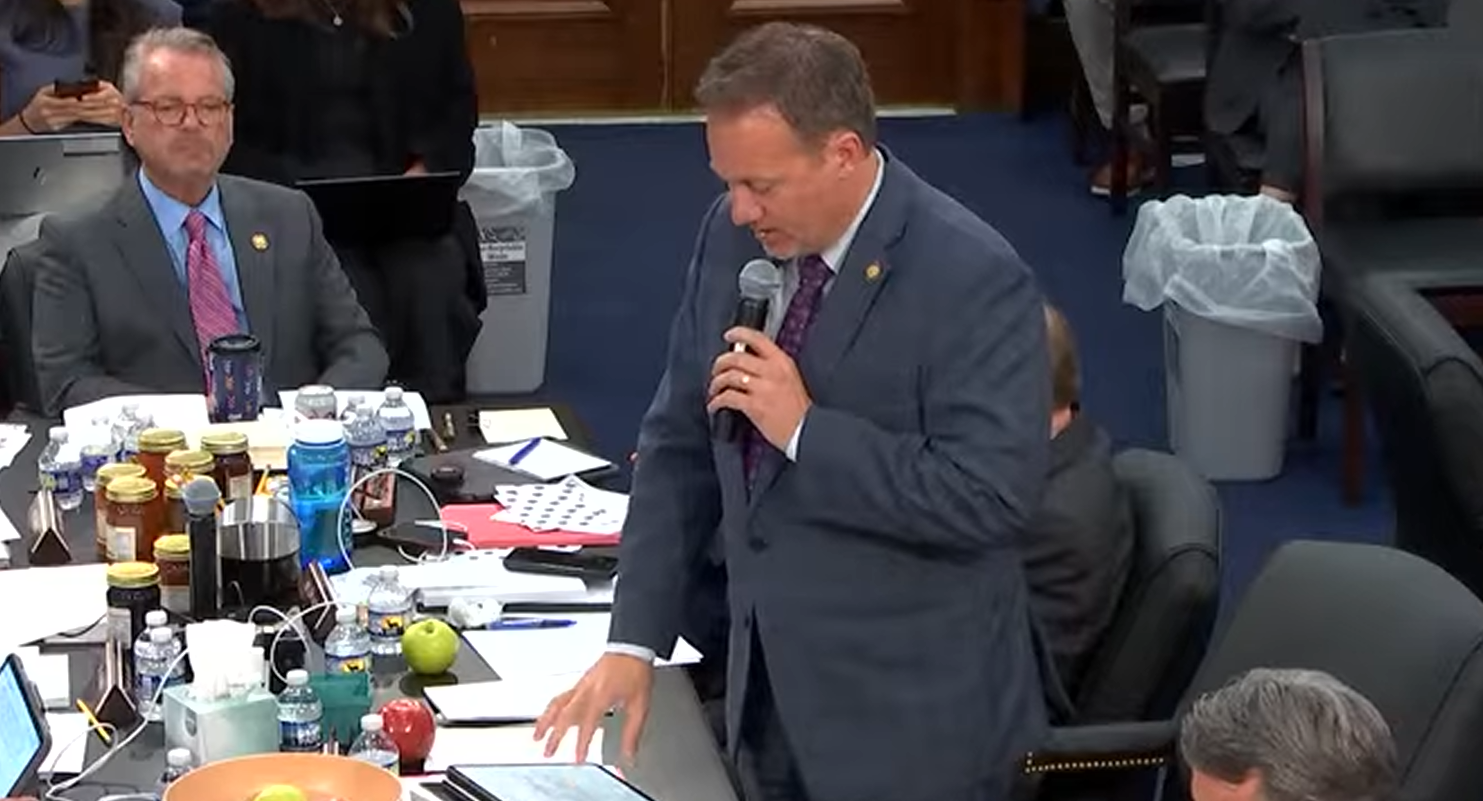
WASHINGTON (June 4, 2026) – Mothers Against Drunk Driving (MADD) is deeply disappointed by last night’s vote to pass Rep. Michael Cloud’s amendment to defund implementation of the bipartisan HALT Drunk Driving Act, a landmark law that the Insurance Institute for Highway Safety (IIHS) estimates will save more than 10,000 lives annually when fully implemented.
The House Appropriations Committee amendment by Reps. Michael Cloud, Celeste Maloy, and Marie Gluesenkamp Perez denies funding for implementation of the law’s rulemaking requirement. Instead, the amendment provides that the U.S. Department of Transportation Secretary “may study” technology capable of preventing drunk driving.
“Let’s be clear. This was a vote to defund the law,” said MADD CEO Stacey D. Stewart. “It was a victory for years of inaccurate claims about a law designed to prevent drunk driving and save lives. The vote turns a bipartisan requirement for an auto safety regulation into the possibility of a study, sending a troubling message to victims and survivors who were promised meaningful action to address a crime that continues to kill 32 Americans every day.”
Congress enacted this law with bipartisan support because drunk driving remains the leading cause of preventable death on our roads. Replacing a statutory requirement with the possibility of a future study moves us further away from the solutions families were promised.
MADD and victims and survivors fought for the 2021 HALT Drunk Driving Act, which requires the U.S. Department of Transportation’s National Highway Traffic Safety Administration (NHTSA) to create a vehicle safety standard similar to seat belts, airbags, automatic emergency braking, and other crash-prevention technologies that Americans now rely on every day.
MADD strongly believes safety and privacy can coexist. Yet some opponents have continued to characterize the law as a threat to consumer privacy, despite the fact that the law itself does not authorize vehicle tracking, remote shutdown, government surveillance, or access to personal driving data.
Contrary to claims made about the HALT Drunk Driving Act, the law does not authorize:
-
the government to remotely control or activate a vehicle “kill switch”;
-
collecting, storing, selling, or sharing driver data;
-
GPS tracking or government surveillance of a personal vehicle or driver;
-
law enforcement or any third party to access or shut down vehicles remotely; or
-
the government or any third party to access personal driving data.
In fact, NHTSA explicitly acknowledged in its formal rulemaking proceeding that protecting consumer privacy would be a priority. The agency stated in the public record that “NHTSA understands that personal privacy considerations are critical to the design of any system” and explicitly sought input on “how best to preserve driver and passenger personal privacy.”
“If opponents truly want to protect driver privacy, MADD is willing to work with any member of Congress to address these concerns,” Stewart said. “Unfortunately, rather than improving the law or strengthening privacy protections, the committee chose to undermine implementation altogether.”
MADD will continue working with members of Congress from both parties, the Department of Transportation, victims and survivors, industry leaders, and privacy advocates to ensure the HALT Drunk Driving Act is implemented in a manner that protects both public safety and individual privacy.