

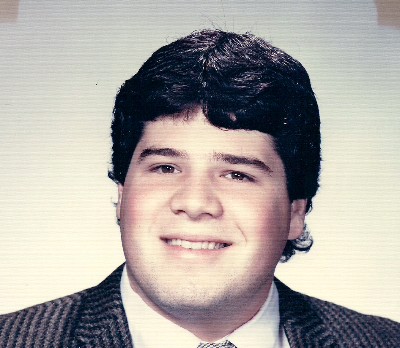
by Bob Nulman, MADD National Ambassador
In 1987, the world lost a bright, engaging 22-year-old young man named Dan Nulman to a drunk and drugged driver, and I lost my son.
Danny, a college senior, was a passenger in a car with four friends on I-95 in Pennsylvania. The impaired driver, a 20-year-old young woman driving the wrong way, going south in the northbound lanes, hit them head-on, killing all five boys and herself, too.
Thirty-nine years later, the pain of losing Danny remains impossible to fully describe. I still feel it every day.
Back then, the landscape of transportation safety and the cultural conversation around drunk driving were vastly different from what they are today. Many of the safety features and laws we now consider foundational were in their infancy, often met with intense skepticism or outright resistance. People debated the necessity of turn signals and seat belt laws, questioned the reliability of airbags and challenged stricter enforcement.
The culture was so different.
It took time, education and tireless advocacy for those unfamiliar innovations to become widely accepted, everyday lifesavers. I know because I did not simply read about that evolution. I lived through it.
I have watched nearly four decades of transportation history unfold since Danny was killed. I have seen technologies once dismissed as unnecessary, intrusive or unreliable become standard features that most drivers would never consider going without. I have watched public attitudes change, laws grow stronger and vehicles become safer in ways that would have seemed almost unimaginable in 1987.
Through all of that progress, one thing has remained painfully unchanged: families are still losing people they love because someone chose to drive impaired.
Today, as I advocate for the future of transportation safety, I hear echoes of that exact same hesitation.
When we discuss the integration of self-driving autonomous vehicles and advanced prevention technologies envisioned under the HALT Drunk Driving Law, the initial public reaction often mirrors the skepticism I heard in the 1980s. Change is daunting, especially when it involves trusting new technology with something as personal as how we travel.
But I have lived long enough to see yesterday’s controversial innovations become today’s unquestioned protections. Having witnessed decades of technological evolution firsthand, I know that what begins as a heavily debated idea can eventually become the very thing that keeps our families whole.
That history does not mean we should embrace every new technology without scrutiny. It means we should evaluate its potential with the understanding that unfamiliar does not mean impossible and new does not mean unnecessary.
As an advocate operating from a strictly technology-neutral perspective, I do not focus on brands or specific proprietary mechanics. I focus on the outcome: a future in which no family is devastated by impaired driving.
Autonomous vehicles have the potential to become the ultimate designated driver. For someone who recognizes that they are not in a condition to drive, an autonomous ride could offer a safe way home without requiring that person to operate the vehicle.
At the same time, the advanced prevention technologies contemplated under the HALT Drunk Driving Law address the other side of the equation. Rather than offering an alternative after someone has become impaired, these technologies are intended to detect or prevent impaired driving before a vehicle can be operated dangerously.
One technology offers another way home. The other could stop an impaired driver before the trip begins. Both represent a profound shift in how we approach road safety: preventing a dangerous decision from becoming a deadly one.
Attending recent safety conferences, walking the demonstration floors and actually riding in technologically advanced vehicles, the contrast between today and 1987 is staggering.
For most people, these demonstrations may represent an exciting glimpse into the future. For me, they carry the full weight of the past.
I remember vehicles before many of today’s basic protections became standard. I remember when people resisted safety measures we now credit with saving countless lives. Most of all, I remember the world as it was when Danny was killed, before any of these emerging technologies were available to intervene.
I often think about the randomness of time and place.
If a self-driving robotaxi had been available to the woman who killed my son…
If her car had been equipped with technology capable of detecting her impairment and preventing her from driving…
Dan might be alive today.
Instead, I carry his picture. Always 22. Always a sad memory.
That is what makes seeing these systems operate in real time so deeply moving. I am watching ideas that would have sounded like science fiction in 1987 transform into tangible tools with the potential to save lives.
It reinforces a profound shift in how we approach road safety. We are no longer limited to reacting to tragedies after they happen. We now have the opportunity to engineer vehicles and transportation systems that intervene before an impaired driving crash can occur.
My work with MADD has always been driven by a singular goal: to ensure that no other parent has to endure the heartbreak of an empty seat at the dinner table.
Having lost Danny nearly four decades ago, it is difficult to express exactly what it feels like to witness this evolution. I have lived through the history of transportation safety while carrying the daily reminder of why that progress matters. I have seen skepticism become acceptance, optional features become standard protections and ideas once considered impossible become part of everyday life.
There is grief for the time before these solutions existed and for the life they might have saved. But overwhelmingly, there is hope for the lives they may still save.
Technology is not just changing how we drive. It is giving us new ways to confront a crisis that has devastated families for more than a century.
We are on the cusp of a future in which impaired driving is prevented not only by individual choices, advocacy and strong laws, but also by innovations capable of stepping in when human judgment fails.
After 39 years of carrying Danny’s memory, I know better than most what is at stake. I have lived through extraordinary advances in technology and transportation safety. I have watched the impossible become ordinary.
Now, I hope to live to see impaired driving become preventable by design.
That is a future worth fighting for.
