

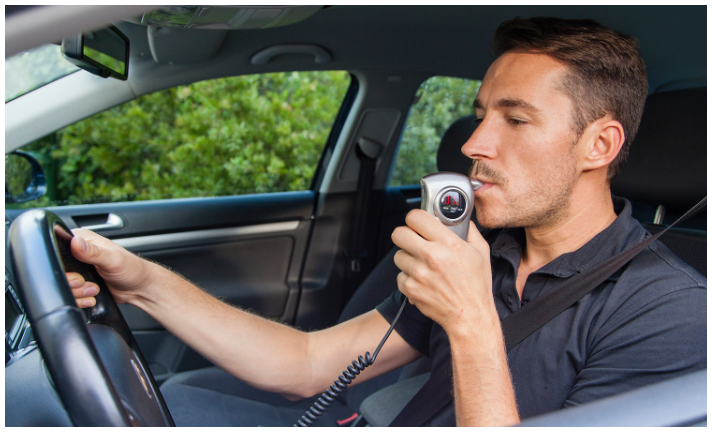
Are you a parent looking to keep your teen driver safer on the road, or did a judge order you to install a car breathalyzer after a recent DUI? If you answered yes to any of these questions, you’re probably wondering what it actually does.
Well, a car breathalyzer is just one piece of a much larger effort to keep impaired drivers off the road. In this guide, you’ll learn how these devices work, how they compare against other DUI prevention technologies, and why they’ve become such an essential tool for saving lives.
Table of Contents:
- What Is a Car Breathalyzer?
- How Car Breathalyzers Work
- Current & Emerging Impaired Driving Technology
- DUI Technology FAQs
- Partner with MADD
What Is a Car Breathalyzer?
A car breathalyzer is a small electronic device wired into your vehicle’s ignition system that measures your breath alcohol concentration (BrAC) before letting the engine start. If it detects alcohol above a programmed limit, your vehicle simply won’t start.
While ”car breathalyzer” is the common consumer term, it’s not the official or legal term you’ll see in court documents or state regulations. Legally, this technology is known as an ignition interlock device (IID). In some states, such as Illinois and Michigan, you might also see it referred to as a Breath Alcohol Ignition Interlock Device (BAIID).
How Car Breathalyzers Work
So how does a vehicle breathalyzer test BrAC, exactly? A car breathalyzer estimates your BrAC by analyzing a breath sample you provide through a mouthpiece. When you turn on the ignition, the device prompts you to blow into it, measures alcohol in your breath, and then compares the result with its programmed threshold.
If your result comes back below the programmed threshold, your vehicle starts normally. If the reading is above the permitted limit, the ignition stays locked until you provide a passing sample.
Beyond the initial test, many auto breathalyzers also use rolling retests, prompting you to provide additional breath samples at intervals after you start driving. These checks ensure you didn’t have someone else start your car for you, and confirm you haven’t started drinking mid-trip.
To stay accurate, ignition interlock devices require routine maintenance and calibration, typically every 30 to 60 days at a certified service center, according to applicable state rules, manufacturer instructions, and your monitoring program requirements.
Impact of Car Breathalyzers on Drunk Driving
Car breathalyzers are highly effective at preventing drunk driving, with research revealing that they reduce repeat impaired driving offenses by nearly 70% while installed. By physically preventing a vehicle from starting after detecting a driver has a breath alcohol concentration that exceeds the programmed limit, breathalyzers discourage impaired driving.
Steven Burritt, a regional executive director at MADD, mentions his experience with the effectiveness of ignition interlock devices:
“In my 13 years with MADD in South Carolina, almost all of our legislative advocacy has been about advancing IID laws. My favorite statistic is that in the past 20 years in this country, there were more than 5 million times a driver at .08 or higher tried to turn their key and drive, and these devices wouldn’t let them. If just a fraction of those drunk driving trips would have ended in a tragedy, that’s still an astounding number of lives saved.”
While no single device can eliminate impaired driving alone, car breathalyzers, in conjunction with other measures, can significantly reduce crashes and fatalities.
Want to learn more about Ignition Interlock laws and how your state ranks? See MADD’s 2026 report for details.
Other Current & Emerging Impaired Driving Technology
Car breathalyzers aren’t the only advanced technology used in the fight against impaired driving. Automakers and safety researchers are developing several other tools to prevent impaired driving.
Some of these systems are already available in vehicles, while others remain under testing or development, with integration expected in the future as the technology gets better. These technologies include:
Driver Monitoring Systems
Driver monitoring systems (DMSs) take a different approach than car breathalyzers. Instead of measuring alcohol in your breath, they use infrared cameras and sensors to watch for signs of impairment, distraction, or fatigue.
DMSs can track things such as:
- Prolonged eye closure
- Continuous looking away from the road
- Erratic acceleration or deceleration
If the system detects patterns consistent with impairment, it will attempt to alert the driver by sounding an alarm, vibrating your seat or steering wheel, or even safely applying the brakes after a warning has sounded.
This technology is effective at preventing impaired driving because it shifts vehicle safety protection from reactive to proactive. Rather than deploying airbags during a crash, DMSs detect the subtle behavior shifts that occur before accidents.
However, the technology also has limitations. Sometimes fatigue or even a simple distraction can produce behaviors that resemble impairment, and a DMS can’t confirm whether alcohol is involved.
A DMS’s accuracy may also vary depending on lighting, camera placement, and how well the system has been calibrated to the individual driver. As a result, it’s advisable to incorporate DMSs as part of a wider vehicle safety strategy.
Self-Driving Cars
Self-driving and advanced driver assistance systems (ADAS) can reduce certain driving demands and, in the case of fully autonomous vehicles, can eliminate them entirely. The level of self-driving automation ranges from 0 (no automation) to 5 (full automation).
Cars classified as Level 1 and Level 2 vehicles may help with acceleration, braking, steering, staying within a lane, or multiple tasks simultaneously. Most self-driving cars currently available to consumers are classified in this category and still require human intervention at all times. In these cases, you shouldn’t assume that a vehicle with automated driving features can safely get you to your destination after alcohol consumption or remove your responsibility to drive sober.
Level 5 vehicles are fully autonomous, meaning that they can operate without human oversight, in any condition, anywhere. While no vehicles have reached this level yet, Zoox and Waymo have come close with Level 4, which offers fully autonomous ride-hailing services operating in specific cities and conditions.
Driver Alcohol Detection System
While a car breathalyzer requires you to actively provide a breath sample, the Driver Alcohol Detection System for Safety (DADSS) is developing a new generation of alcohol detection systems, including touch-based systems and passive systems.
Touch-based systems with sensors embedded in the start button, steering wheel, or gear shift can measure blood alcohol levels through the skin quickly by shining an infrared light through the driver’s fingertip or palm.
In contrast, passive systems with sensors positioned near the driver’s seat can analyze the cabin air the driver naturally exhales while driving without requiring any further action from the driver.
These systems could close the gaps that come with active testing, like a driver asking a sober passenger to blow into the breathalyzer instead.
However, they aren’t perfect yet. Together with engineers, chemists, and data scientists, DADSS is still working to reduce sensor size, improve sensor accuracy, enhance sensor ability to withstand harsh conditions, and extend sensor service life.
Can one serve a lengthy prison sentence for a DUI? Find out whether a DUI is a felony or misdemeanor.
DUI Technology FAQs
Where can you buy a breathalyzer?
You can buy a personal handheld breathalyzer from many retailers, pharmacies, and online stores for personal alcohol screening. However, you can’t simply purchase a court-ordered ignition interlock device yourself. Instead, a state-approved service provider must install it directly in your vehicle. You’ll typically need to select from a list of authorized providers in your state to begin the installation and monitoring process.
How much does a breathalyzer cost?
Car breathalyzer costs vary widely depending on the type of device you need. A personal handheld breathalyzer is typically the more affordable option, with prices varying based on features. An ignition interlock device usually costs more because you’ll pay an initial installation fee, followed by recurring monitoring or reporting fees. Since pricing varies across providers and states, contact a few local providers to get accurate, current pricing for your situation.
Can you install a car breathalyzer voluntarily?
You can decide to install a breathalyzer for your car even without a court order. While breathalyzers are often associated with DUI requirements, many people choose to install them voluntarily.
For instance, you can choose to install a voluntary car breathalyzer to hold yourself accountable after a personal commitment to sobriety, to safeguard your teen driver, or as part of your business fleet’s broader safety policy. Regardless of your reason, check with local providers and your state’s regulations first, as availability and installation requirements vary.
How long will an interlock detect alcohol?
How long an ignition interlock device can detect alcohol on your breath depends on your blood alcohol concentration, metabolism, how much alcohol you consumed, and how much time has elapsed since your last drink. These factors make it difficult to predict a timeline with certainty. The safest option is to never drive after drinking. If you’ve been drinking, arrange a sober ride instead.
How long should you wait to drive after drinking? Discover how long alcohol stays in the system.
Partner with MADD to Help Prevent Impaired Driving
Technologies such as car breathalyzers, driver monitoring systems, and driver alcohol detection systems hold promise for addressing impaired driving in the future, but they aren’t enough just yet. Lasting change also depends on education, vocal advocacy, strong laws, and the personal responsibility each of us bears when we get behind the wheel.
That’s why at MADD, our mission goes beyond explaining how DUI technologies work. Alongside advancing technology, we’re committed to ending drunk and drugged driving through education, advocacy, and victim support. You can be part of the change too by supporting impaired driving prevention efforts or simply making the choice to never drive impaired.
Ready to create safer roads for everyone? Discover ways to get involved in the fight against drunk driving.
Impaired Driving Ends Here
Impaired driving impacts everyone who drives, rides, and walks along our roads — yet it’s completely preventable. MADD is working to end it for good.
